Ore Grade Assay
Percent-level assays by multi-acid digestion with an AA finish — for mineralized intercepts, concentrates, and ore that read past the range of trace geochemistry.
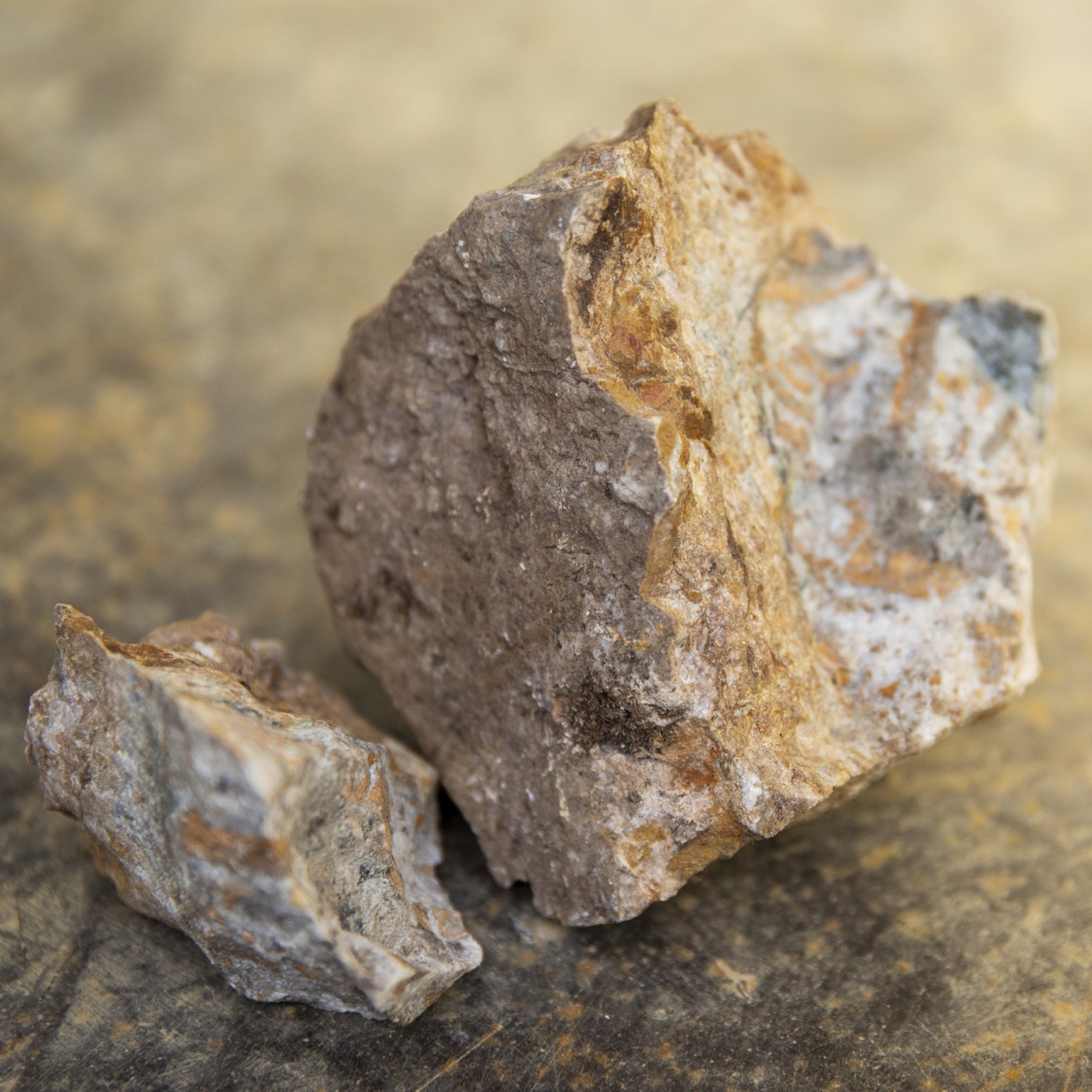
Trace methods are calibrated for background and anomaly-scale concentrations; run ore through them and the numbers top out or lose precision. The ore grade assay is scaled for high-grade material instead. A small, precisely weighed charge is digested in nitric and perchloric acid on a hot plate, hydrochloric acid is added on a second heating, and the solution is made to volume and read by atomic absorption against ore-grade calibrations. Silver assays use a larger charge for representivity, and antimony digestions add tartaric acid to hold the metal in solution.
The result is assay-grade precision from low fractions of a percent up to concentrate-level metal content. Every batch is digested and analysed with blanks, duplicates, and certified reference standards, and the copper, lead, nickel, silver, and zinc determinations anchor part of the lab’s ISO/IEC 17025 accredited scope.
Ore grade elements
| Element | Lower detection limit | CALA scope |
|---|---|---|
| Co | 0.001 % | Not in scope |
| Cu | 0.01 % | Accredited (A3) |
| Pb | 0.01 % | Accredited (A3) |
| Ni | 0.01 % | Accredited (A3) |
| Zn | 0.01 % | Accredited (A3) |
| Fe | 0.01 % | Not in scope |
| Ag | 0.1 g/t | Accredited (A3) |
| Sb | 0.01 % | Not in scope |
Lower detection limits by acid digestion with an AA finish. The method is suitable from about 0.01% up to 50–60% metal content; per-element upper bounds are not published.